Angela Piehl
Associate Professor / Area Head, Painting & Drawing
Department of Art & Design, Peck School of the Arts
University of Wisconsin, Milwaukee
ART 201, Drawing 2


Narrative with Hands or Feet
(Drawing 2 online)

Interior Zoom Drawings
(Drawing 2 online)


Panoramic Landscape Collage Drawings
(Drawing 2 online)

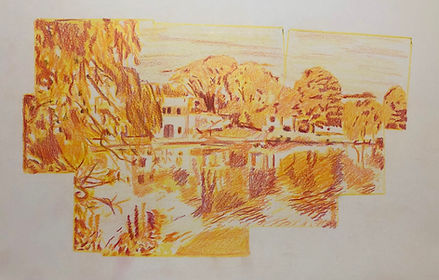

Color Noir Drawings
(Drawing 2 online)


Historical Re-Interpretation Drawings

Re-enactment Drawings

Homage or Parody Drawings


Image Scrap Drawings


Drawing 2 Instructional Handbook
Authored by Piehl for new staff in the Painting & Drawing Area who are teaching Drawing 2 as guidelines to course content.
ART 243, Intro Painting

Value Blocking Exercises
Value Blocking Study Objectives:
-
Thumbnails and compositional planning
-
Value Shape vs. Object Shape
-
Establish familiarity with tools/techniques
-
Mix 5 value gradation scale, apply to still life
-
Establish light source, accurate proportions and believable volumes, balanced compositions, overall compositional cohesion
Limited Palette:
Value with Temperature Paintings

Value with Temperature Still Life Painting Objectives:
-
Practice complex observation
-
Practice mixing chromatic grays, neutral grays, and dark tones from complimentary colors.
-
Observe temperature influences of local color, light source temperature, and shadow temperatures.
-
Understand influences of intermingling temperatures/values/local colors
-
Establish light source, accurate proportions and believable volumes, balanced compositions, overall compositional cohesion


Color Mixing Exercises


Color Exercises include:
-
Working with co-primary colors to learn about palette-based color mixing with strategy
-
Learning how to make adjustments to colors with alterations in value (lightening and darkening color without white or black), altering saturation/intensity, adjusting warm/cool influences, and understanding transparency/opacity
-
Glazing and washing as a means of influencing optical mixing and strategic layering


Solid Color Objects in Color Environments Paintings
For this project, students observe a small still life arrangement of a mix of white objects and solid-color objects that represent warm/cool co-primaries from our painting kits, in front of colorful surfaces. Students build their palette by pre-mixing a range of gradations for each surface in the still life, and color matching by holding the palette knife with a dab of paint in front of the object or surface. Students work using direct or alla prima painting methods, and mix wet on wet paint directly onto paper. Objectives are to continue to refine color-mixing skills, and observation skills based on problem solving how to convincingly intermingle light and color seen in the still lifes.


Warm/Cool Color Influence Portraits
Warm/Cool Portrait Objectives:
-
Rendering their portrait in oil paint (practice w proportion and likeness, and correcting as paint is layered)
-
Applying saturated colors with warm/cool influence to skin tones through observation
-
Painting textures like clothing and hair convincingly
-
Practicing tonal under-painting process with emphasized color


Full Palette Still Life Paintings
For this project, students observe a still life arrangement of a mix of textural objects and complex surface objects, such as glass, metals and fabrics. Students create a tonal under-painting (value based analysis) and then work in layers to create convicing representations. Objectives are to continue to refine color-mixing skills, and observation skills based on problem solving how to convincingly intermingle light and color seen in the still lifes, as well as consider complex interactions such as reflections, intermingling alla prima and layered techniques (glazing/washing) based on strategic decisions for each object in the still life.
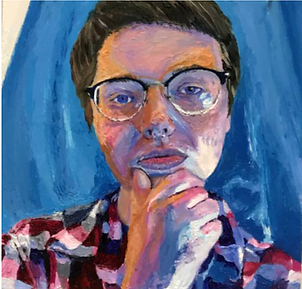


Palette Knife Portrait Paintings
Palette Knife Portrait Objectives:
-
Rendering portrait using tools other than brush
-
Practicing w proportion and likeness, and correcting as paint is layered
-
Crafting a color mixing strategy on the palette (pre-mixing)
-
Skin tone mixing techniques
-
Practicing modes of painting that require flexibility and patience with longer dry
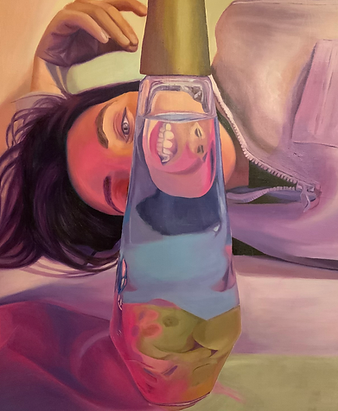

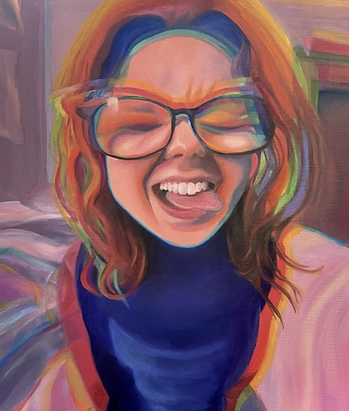

Observed Abstraction Portrait
The objective of this project is to continue to develop skills in observing and mixing color, understanding value and contrast relationships, and building skills in creating surface texture or layering paint, while adding new opportunities within content and abstraction. Students have the choice of 3 different approaches in this project-- painting a portrait from a reflective object other than a mirror, painting a portrait as seen through a glassine or lens-based surface, or painting a portrait ditorted through digital manipulation. Each approach offers a different opportunity for Abstraction from what can be observed directly.
ART 343, Figure Painting
Short and Long Pose
Grisailles Value Paintings
Objectives:
-
Review of measurement and proportioning techniques
-
Practice conveying pose and weight-bearing
-
Observing light and shadow, conveying range of value
-
Working directly on surface w paint/layering value shapes (dark to light)


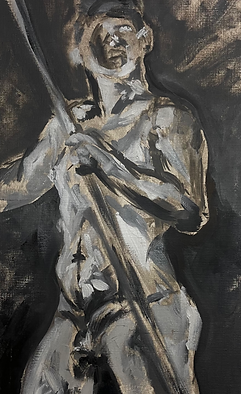

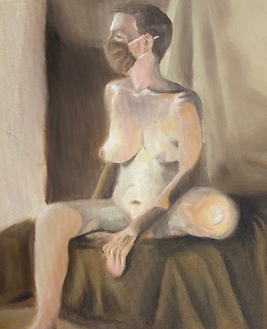
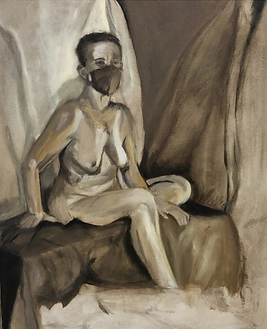

Short and Long Pose
Brunailles Paintings
Objectives:
-
Review of measurement and proportioning techniques
-
Practice conveying pose and weight-bearing
-
Observing light and shadow, conveying range of value through wiping out light values (bistre)
-
Working on a yellow under-painting surface


Short Poses, Value Blocking with Limited Palette

Short Pose Color Blocking


Skin tone mixing exercises


Objectives:
-
Introducing color interaction with skin tones
-
Practice blocking in form in quick sessions
-
Observing light and shadow, conveying range of value
-
Working directly on surface w paint/layering value shapes
-
Practice mixing natural skin tones (emphasizing range in mixture)
-
Translating observed color to paint-based color

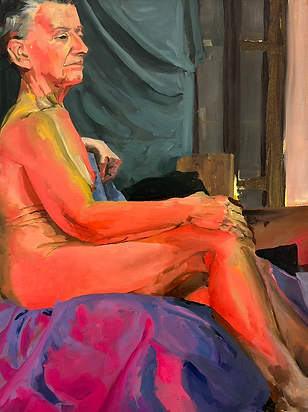
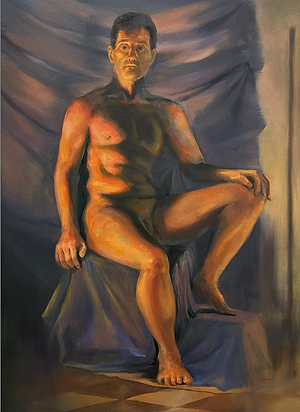
Multi-session Pose, with Color-influenced light source
Objectives:
-
Translating complex figure/environment interactions
-
Practice managing color palette with broad range of color and value
-
Observing light and shadow, conveying range of value with temperature
-
Adapting to changing light


Multi-session Pose, with Expressive paint application
Objectives:
-
Translating complex figure/environment interactions
-
Applying aspects of context/narrative
-
Practice managing color palette with broad range of color and value
-
Making strategic choices with paint application, such as mark-making, blending, and interpreting observed color, light and value

Palimpsest Figure Paintings
Objectives:
-
Working quickly to observe a diverse range of poses
-
Making strategic formal choices (color, scale, overlap, placement, interaction of pose, etc.) to create compositional balance and interest
-
Making strategic choices with paint application, such as mark-making, blending, and interpreting observed color, light and value


Large Scale Self-Portrait Paintings
Objectives:
-
Investigate possibilities of content through use of the figure
-
Working large scale, long term on a full body self-portrait with personal interest and concept
- Self-designing a formal approach to a successful composition
- Solo project planning-- Ideation through executing, then critiquing
ART 443, Painting Strategies


6 Modes of Painting
Objectives:
-
Working in a variety of modes of paint application and materiality
-
Making strategic formal choices within a restrained subject matter, composition and color palette
-
Interpreting observed color, light and value through experimentation
Maquette Projects


Objectives:
For this project, students build a small, non-representational maquette from simple materials. The maquette should have a variety of elements, and some spatial depth. Students paint the maquette, negotiating the boundaries between still life and abstraction. Students can work from both observing the maquette and taking photos to help with compopsitional aspects like vantage point and cropping.
Maquette Diptych
Objectives:
After students create a maquette and paint a direct observation of the set up, they draft a proposal to execute a second painting, capitalizing on formal aspects they can emphasize in response to their first painting.


References Project
This project asks students to prepare for a painting by producing a minimum of 4 different forms of references in conceptualizing the painting. Students begin experimenting, and asking questions by trying a variety of approaches to help inform the work. While the end result produced is a painting, students also show inspiration and reference materials, any iterations and prototypes or sketches alongside the final piece, and must be prepared to discuss these with the class at various stages of the project.


ART 441, Drawing Strategies
Exploring Materials/Process Project
For this project, students create a piece in which they give equal importance to materials and process as they do form, imagery and content. Students document the process of creating their piece and show this documentation in critique in addition to the final piece itself.


Drawing into bedsheet with acrylic and colored pencil
Drawing in colored pencil incorporating tiles, police tape and plexiglass


Drawing with dyed glues and watercolor
Drawing with concrete and charcoal powder cast around objects
Woven Drawing
Palimpsest Drawings
For this project, students consider the potential of layering and repetition within a personal approach, and choose an implication for layering or repetition that has the capacity for interpretation– their approach to process must also introduce a concept, or content. Working expressively with value, mark- making and line quality highlights the constructed nature of the image. Students are asked to shift emphasis from subject matter to the nature of the picture itself (concept/content).


Independent Projects


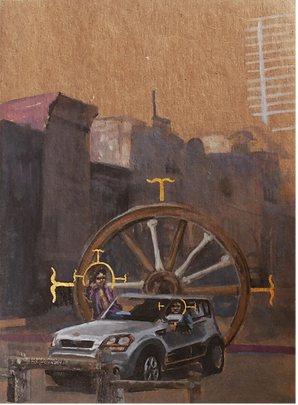


ART 541, Drawing Studio
Independent Series, charcoal on paper


Independent Series, colored pencil on paper

Independent Series, charcoal on paper

Independent Series, charcoal and pastel on paper

Independent Series, oil pastel on paper


ART 543, Painting Studio

Independent Series

Independent Series

Independent Series
